
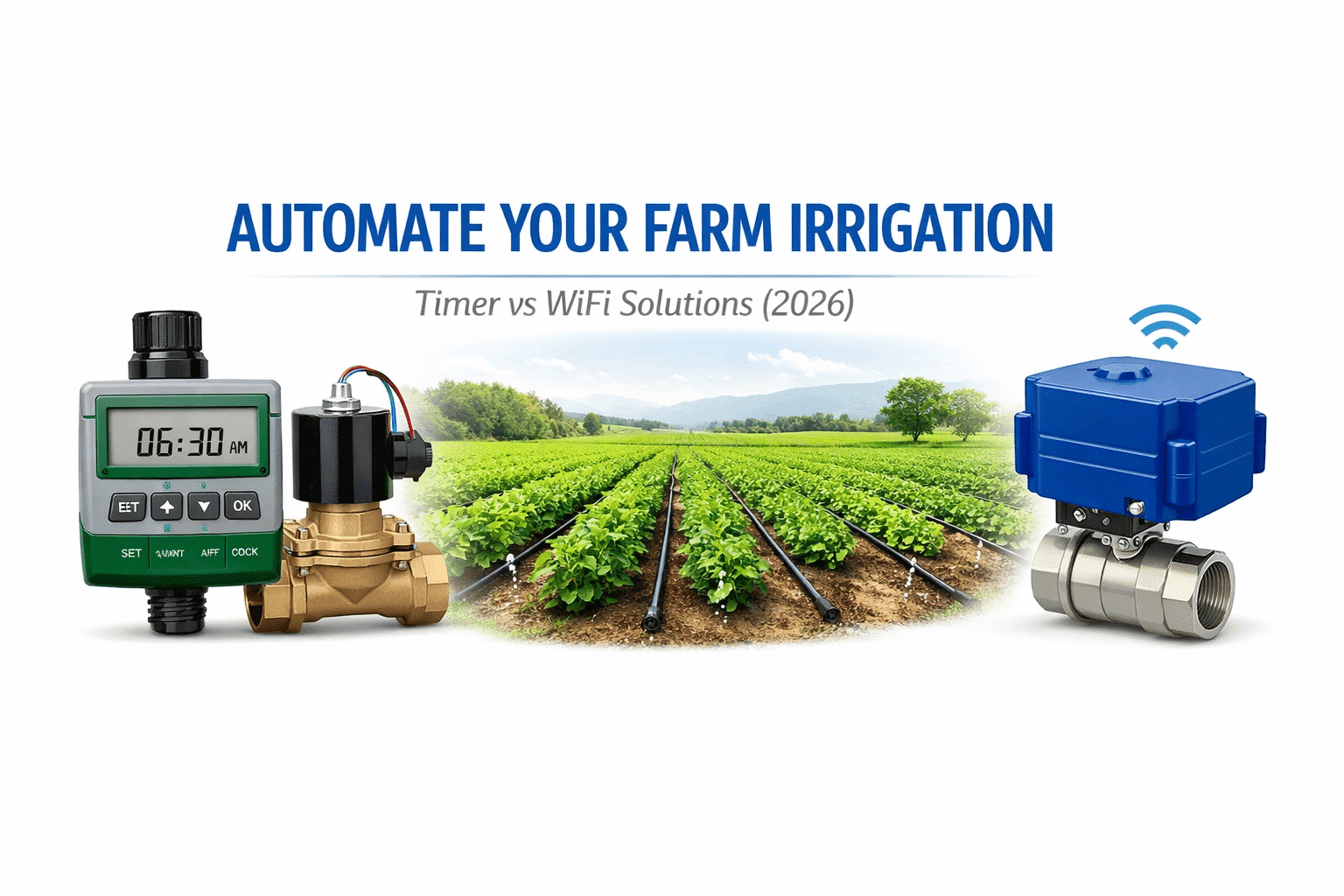
How to Automate Your Farm Irrigation System in Kenya: Timer vs WiFi Solutions (2026)
Looking to automate your farm irrigation in Kenya? In this guide, we compare two proven approaches: timer-based systems (using solenoid valves) and WiFi smart systems (using ball valve actuators). Whether you manage a small kitchen garden, a medium-sized farm, or a large commercial plot, this comparison will help you choose the right automation solution to save water, reduce labor, and increase crop yields.
Stop Waking Up at 5 AM to Water Crops
Manual irrigation is time-consuming, inconsistent, and wasteful. Many Kenyan farmers lose valuable sleep waking up before dawn to open valves, only to forget to close them later – wasting water and money. Automation solves this. With the right system, your crops get watered at the optimal time, every time, whether you are home or away. In this guide, we break down two reliable automation approaches used by farmers across Kenya.
Quick Decision Guide
- Best for Large Farms: Timer + Solenoid Valves No internet needed, multi-zone control
- Best for Tech-Savvy Farmers: WiFi Ball Valve Remote control via smartphone app
- Best for Solar Farms: 12V DC Timer System Runs directly off solar battery
Related Guides
Learn more: Complete drip irrigation guide for Kenya | Water conservation tips for Kenyan farmers | Solar power for farm automation
Why Automate Your Irrigation System?
Save Time & Labor
Set your schedule once and let the system handle daily watering. No more manual valve turning, no more missed sessions. Free up time for other farm tasks.
Conserve Water
Precise timing prevents over-watering. Water only when needed, at optimal times (early morning/late evening) to reduce evaporation losses.
Improve Crop Yields
Consistent watering at the right times reduces plant stress, promotes healthy growth, and can increase harvest quality and quantity.
Understanding the Two Main Automation Systems
Timer + Solenoid Valve System
How it works: Timer sends electrical signal → Solenoid valve opens/closes → Water flows/stops
Best for: Farms without WiFi, large areas, budget-conscious farmers, solar-powered setups
Power options: AC 220V timers or DC 12V timers for solar systems
Key requirement: Must replace existing manual valves with solenoid valves
WiFi Smart Valve System
How it works: WiFi signal → Motor rotates ball valve lever → Water flows/stops
Best for: Tech-savvy farmers, remote monitoring, small-medium farms, smartphone control
Power options: 12V adapter included (plug into outlet or solar inverter)
Key advantage: Uses existing ball valve – no valve replacement needed
System 1: Timer-Based Irrigation Automation
Timer-based systems are reliable, work without internet, and are ideal for farms with stable power or solar setups. They control solenoid valves that open/close based on your programmed schedule.
For AC Power (220V) Farms:
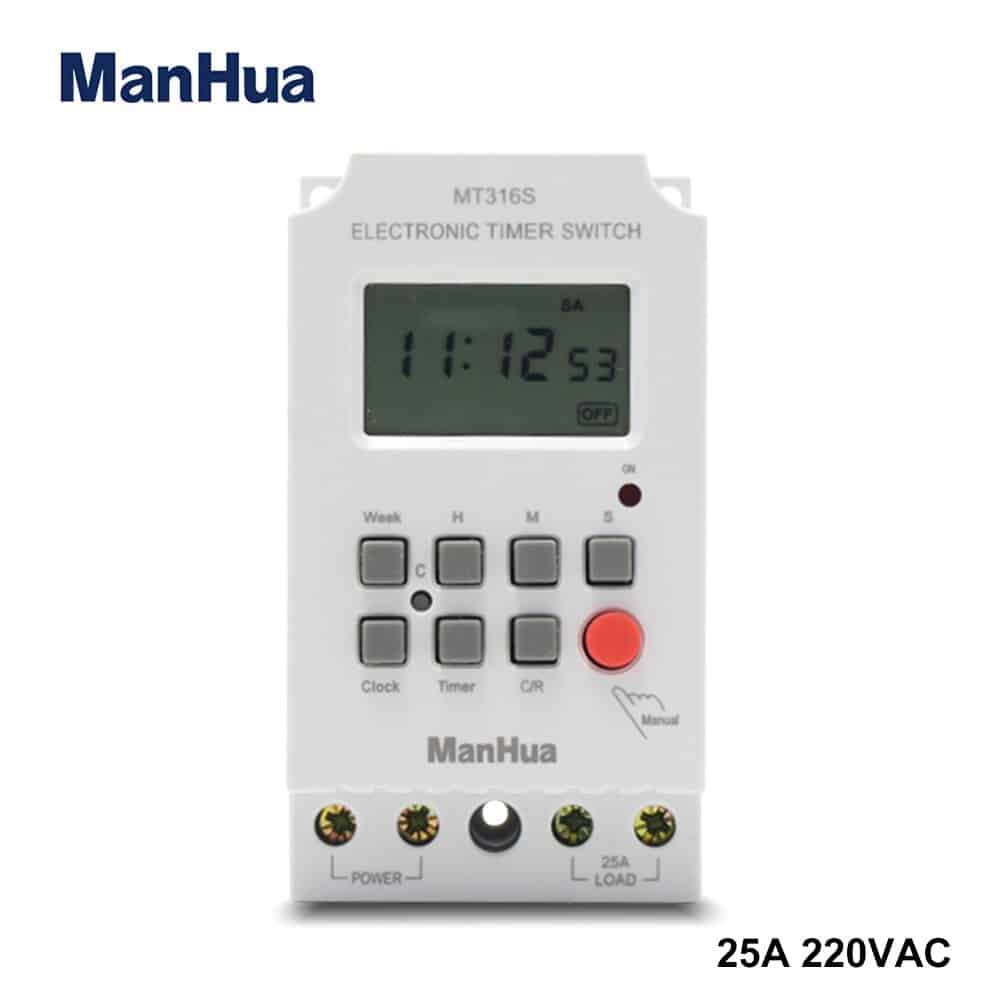
- Voltage 220V AC
- Capacity 25A
- Programs 28 ON/OFF settings
- Timing Range 1 second to 168 hours
- Mounting DIN rail

- Special Feature Auto sunrise/sunset
- Relays 2 independent outputs
- Programs 22 ON/OFF per circuit
- Battery Backup 4-5 years
- Best For Irrigation scheduling
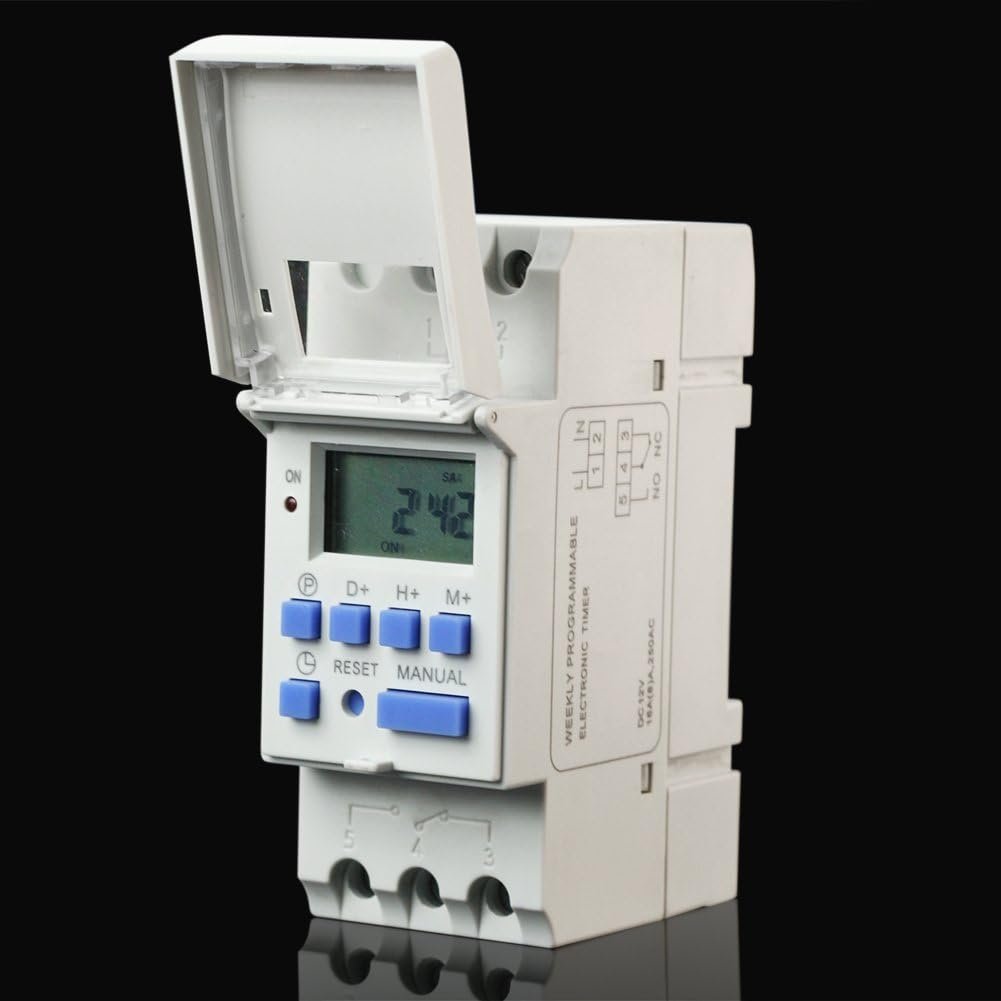
- Voltage 220V AC
- Capacity 16A
- Programs 16 ON/OFF per day
- Dual Control Yes (2 devices)
- Installation Plug-and-play
For DC/Solar Power (12V) Farms:
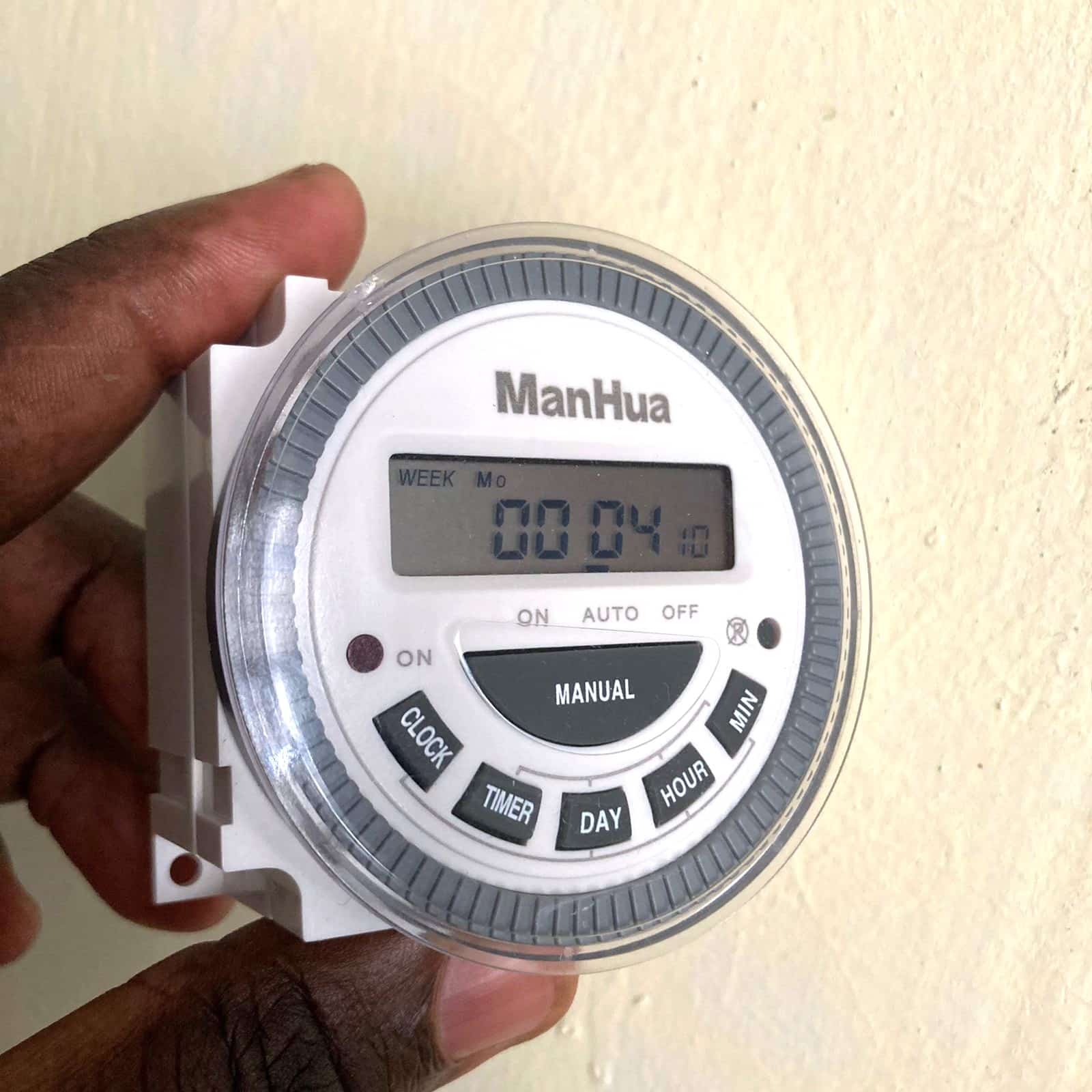
- Voltage 12V DC
- Capacity 16A
- Programs 17 ON/OFF daily
- Display LCD
- Best For Solar-powered farms

- Voltage 12V DC
- Capacity 16A
- Schedule Types Hourly/Daily/Weekly
- Memory Backup 60+ days
- Price Range Budget-friendly
Basic Wiring Setup: Timer + Solenoid Valve
Power Source → Timer → Solenoid Valve → Water Main
AC System Example:
Mains Power (L/N) → MT316S Timer (L/N input)
Timer Output (terminals 3/4) → Solenoid Valve (2 wires)
Valve → Irrigation line → Sprinklers/Drip emitters
DC/Solar System Example:
Solar Battery (12V +/–) → MT619HPV Timer (+/– input)
Timer Output → 12V DC Solenoid Valve
Valve → Irrigation line → Sprinklers/Drip emitters
Note: Always use waterproof junction boxes for outdoor connections. Match timer voltage to valve voltage (AC timer with AC valve, DC timer with DC valve).
System 2: WiFi Smart Irrigation (No Solenoid Needed!)
WiFi-based systems offer remote control via smartphone app. They attach to your existing ball valve – no valve replacement required. Perfect for farmers who want to monitor and control irrigation from anywhere.

- Valve Compatibility ½”, ¾”, 1″ ball valve
- Control Smart Life/Tuya app
- Scheduling Daily/Weekly/Countdown
- Voice Control Alexa, Google Home
- Weather Rating IP65 waterproof
How to Install the WiFi Valve
- Ensure your ball valve has a lever handle (T-handle), not a knob
- Attach the motor unit to the valve lever using the included clamp
- Connect the 12V power adapter to a nearby outlet or solar inverter
- Download Smart Life or Tuya Smart app and follow pairing instructions
- Set your watering schedule in the app (daily, weekly, or countdown timer)
- Test the valve open/close function before finalizing installation
Head-to-Head: Timer vs WiFi Systems
| Feature | Timer + Solenoid System | WiFi Ball Valve System |
|---|---|---|
| Initial Cost | Timer + valve cost | Uses existing valve LOWER ENTRY |
| Internet Required | No WORKS OFFLINE | Yes (2.4GHz WiFi) |
| Remote Control | No | Yes (smartphone app) |
| Technical Skill | Moderate (basic wiring) | Easy (clamp-on install) |
| Best For | Large farms, no internet, solar setups | Small-medium farms, tech users, remote monitoring |
| Power Source | AC 220V or DC 12V (solar) | 12V adapter (included) |
| Multi-Zone Control | Yes (with multi-channel timer) | One valve per device |
| Weather Resistance | Depends on enclosure | IP65 rated (outdoor ready) |
Ready to Automate Your Farm?
Whether you choose a timer system or WiFi valve, you will save time, conserve water, and improve crop health. Browse our irrigation automation products today.
View WiFi Irrigation ValveReal-Life Use Cases in Kenya
Small Kitchen Garden (Nairobi)
A homeowner in Karen uses the Tuya WiFi Valve on their garden tap. They set watering for 6 AM and 6 PM daily via the app. No need to remember manual watering – crops stay healthy even when traveling for work.
Medium Vegetable Farm (Nakuru)
A farmer in Nakuru uses the ManHua MT822 Astronomical Timer with two solenoid valves. The timer waters Zone 1 at sunrise and Zone 2 at sunset automatically – no internet needed, perfect for rural areas with spotty connectivity.
Solar-Powered Farm (Turkana)
A pastoralist in Turkana uses the ManHua MT619HPV 12V timer with solar battery and DC solenoid valves. The system waters livestock troughs at dawn and dusk without needing grid power or internet – reliable in remote areas.
Greenhouse Operation (Kiambu)
A greenhouse manager uses multiple WiFi valves controlled via smartphone. Each valve waters a different crop zone on its own schedule. The manager can adjust watering remotely based on weather forecasts – maximizing yield while minimizing water waste.
Common Mistakes to Avoid
Mixing AC Timer with DC Valve (or Vice Versa)
Reality: Timers and valves must match voltage. An AC timer will not work with a DC solenoid valve. Always verify voltage compatibility before purchasing.
Installing WiFi Valve Where Signal Is Weak
Reality: The WiFi valve requires stable 2.4GHz WiFi to sync schedules. Test signal strength at the valve location before installation. Consider a WiFi extender if needed.
Using Undersized Wires for Long Runs
Reality: Long wire runs cause voltage drop. For distances over 30 meters, use thicker gauge wires (16 AWG or lower) to ensure solenoid valves receive adequate power.
Forgetting Waterproof Connections
Reality: Outdoor electrical connections must be waterproof. Use IP65-rated junction boxes and silicone sealant to protect timer outputs and valve wiring from rain and dust.
Which System is Right for Your Farm?
Final Recommendation: Choose Based on Your Setup
Choose Timer + Solenoid System If:
- Your farm has no reliable WiFi or mobile internet
- You manage multiple irrigation zones (use multi-channel timer)
- You have a solar power setup (use 12V DC timer + DC valves)
- You prefer a one-time setup with no app dependency
- You are comfortable with basic electrical wiring
Best for: Large farms, rural areas, solar-powered operations, commercial agriculture
Choose WiFi Ball Valve System If:
- You want remote control via smartphone app
- You have existing ball valves (no valve replacement needed)
- You prefer easy, tool-free installation
- You want to adjust schedules on-the-go
- You have stable 2.4GHz WiFi at the valve location
Best for: Small-medium farms, home gardens, greenhouses, tech-savvy farmers
Frequently Asked Questions
Ready to Automate Your Irrigation?
Whether you choose a reliable timer system or a convenient WiFi valve, automation will save you time, conserve water, and help your crops thrive. Start small, test your setup, and scale as needed.