In today’s world, understanding and controlling your electricity consumption is more important than ever. Two popular options for achieving this are the MANHUA TG44NE Watt Meter Socket and the Atorch S1 Smart WiFi Energy Meter. While both aim to empower you with energy insights, they cater to slightly different needs and offer distinct functionalities. Let’s break down the key differences and similarities to help you choose the right device for your home or office.

MANHUA TG44NE Watt Meter Socket: The Reliable Standalone Monitor

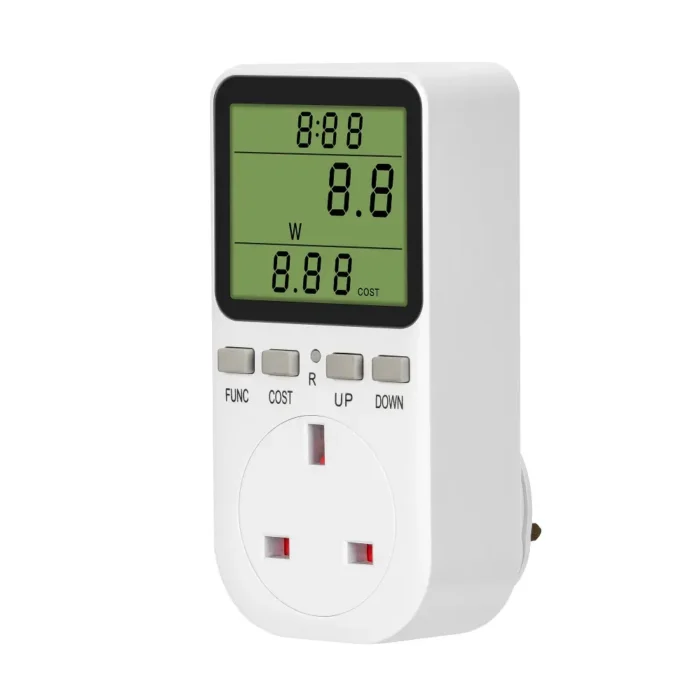
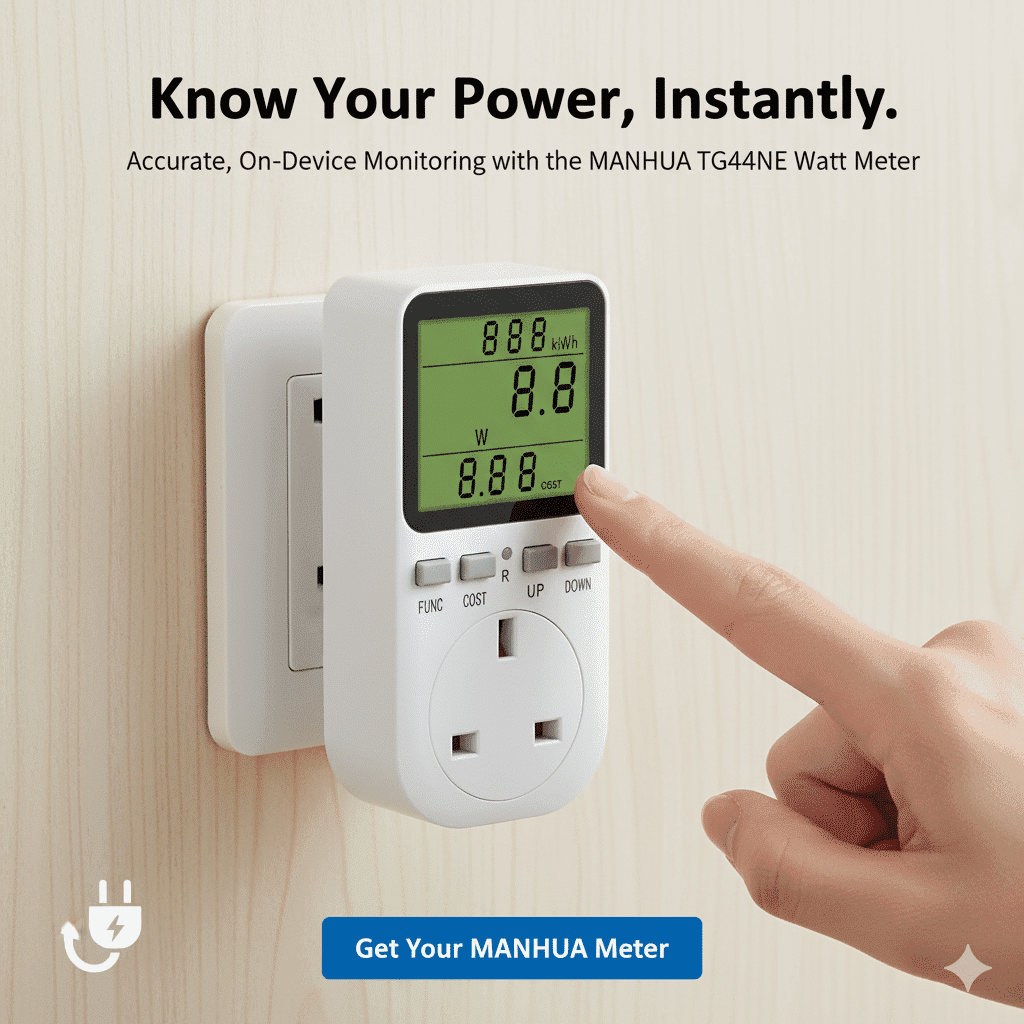
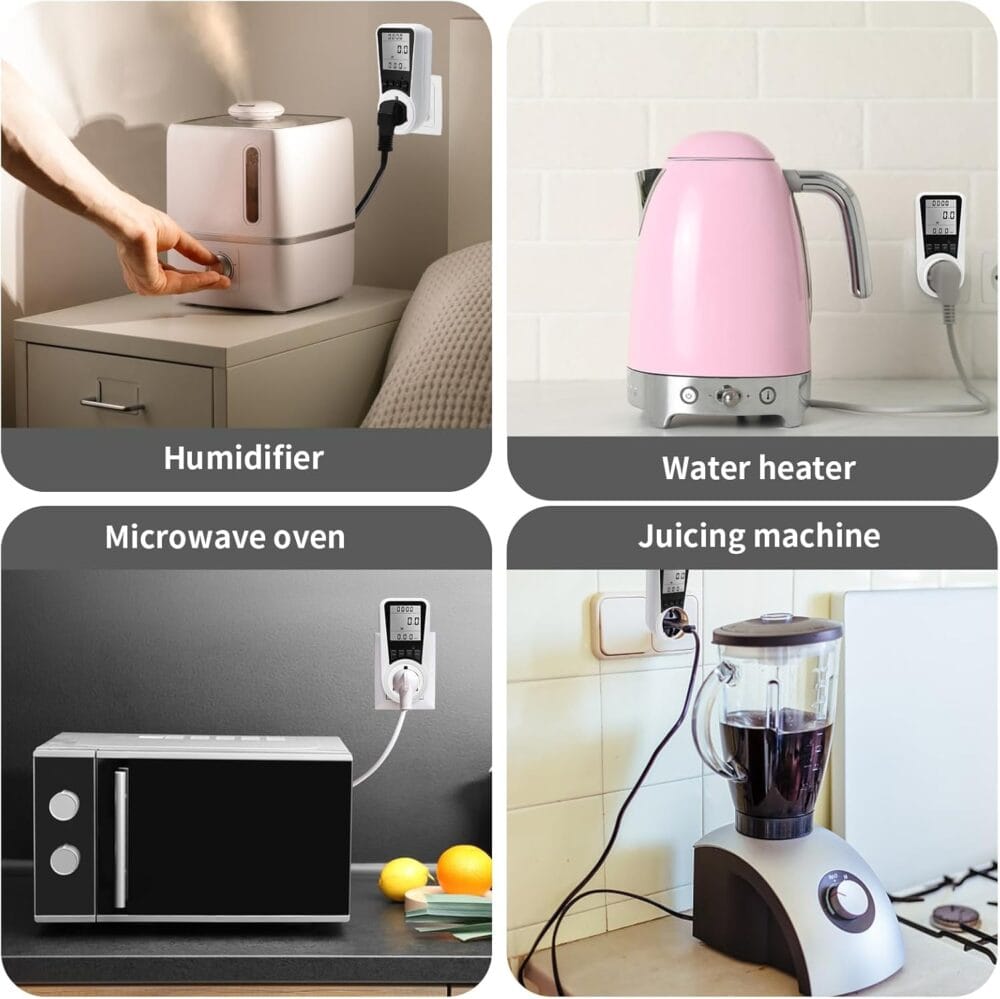
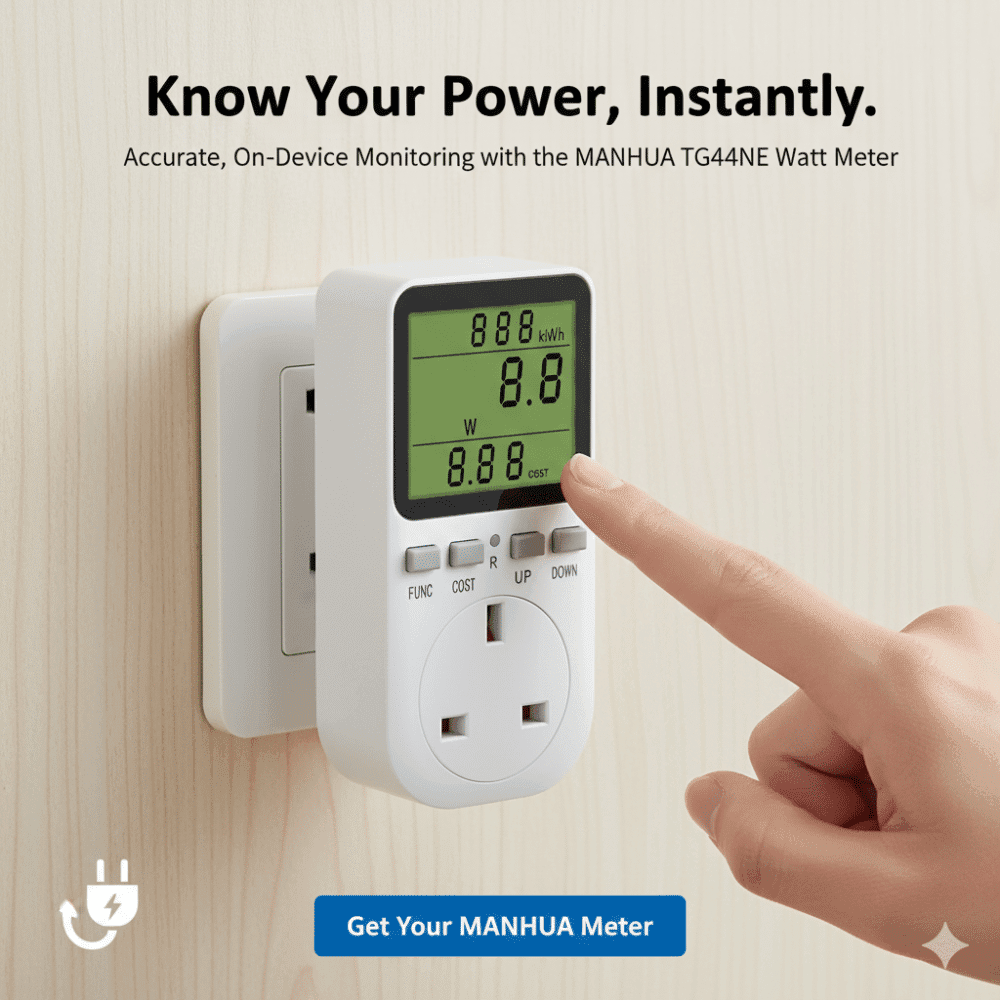
The MANHUA TG44NE is a robust watt meter socket designed for straightforward, on-device energy tracking. It’s a fantastic “plug and play” solution for those who want immediate readings without the need for apps or smart home integration.
Key Strengths of MANHUA TG44NE:
- Comprehensive On-Device Display: Features a bright backlit LCD that shows real-time voltage, current, wattage, power factor, frequency, accumulated energy (kWh), and usage duration.
- Live Cost Tracking: Allows you to input your electricity cost per unit directly on the device, providing immediate cost calculations.
- Overload Protection: Automatically alerts if consumption exceeds 16A or 3600W, preventing potential hazards.
- Inbuilt Battery Memory: Crucially, it saves all your readings during power outages, so you never lose track of your data.
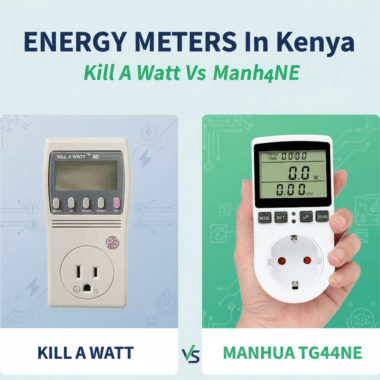
- Simplicity: No setup or wiring beyond plugging it in. It’s an excellent “Kill A Watt” replacement with higher capacity (3600W).
The MANHUA TG44NE is perfect for users who prefer a direct, visual display of their energy consumption and don’t require remote control or detailed historical data analysis via an app.
Atorch S1 Smart WiFi Energy Meter: The Connected Smart Home Essential
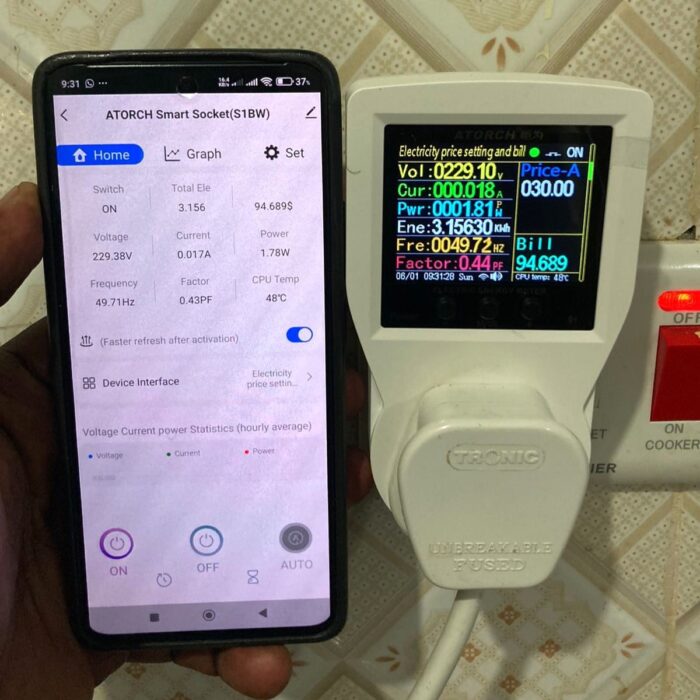
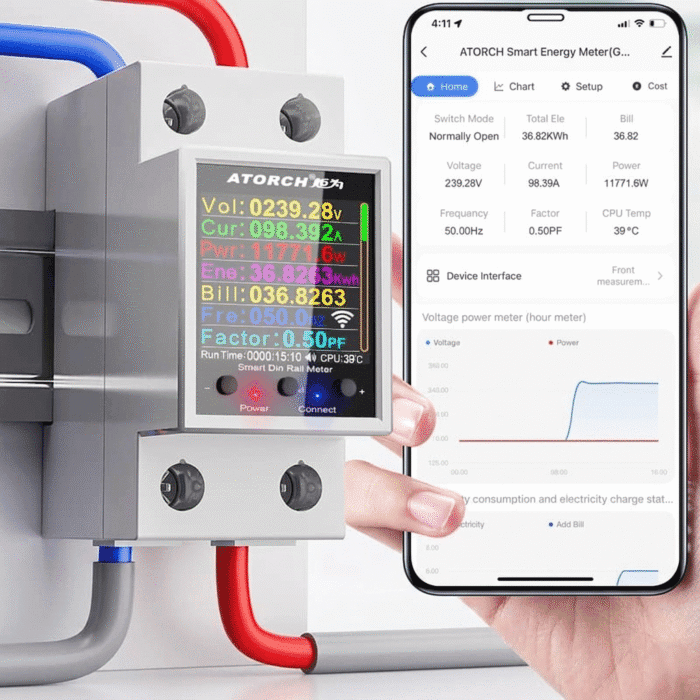
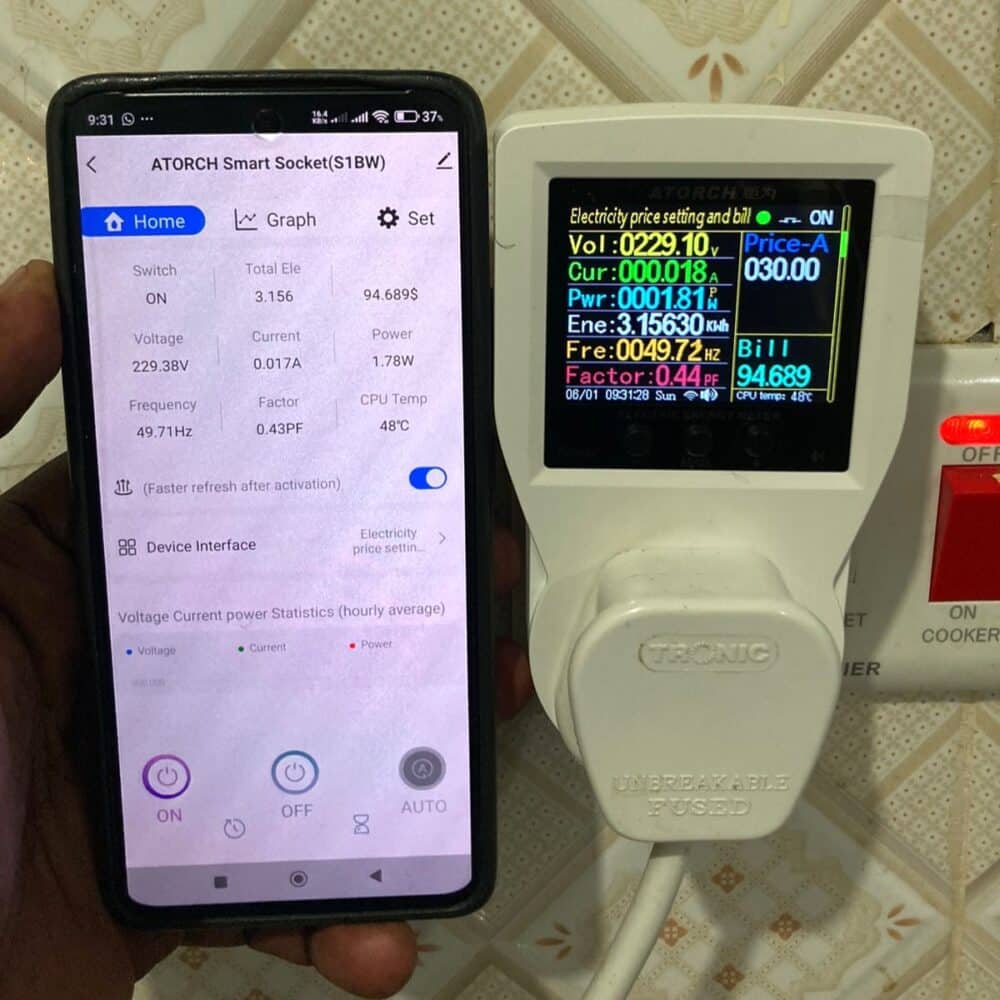
The Atorch S1 Smart WiFi Energy Meter takes energy monitoring to the next level by integrating with your Smart Home products. Using the Tuya or SmartLife app, it offers real-time monitoring combined with remote control and advanced automation features.
Key Strengths of Atorch S1:
- Remote Control & Monitoring (Tuya/SmartLife App): This is the biggest differentiator. You can turn devices on/off from anywhere, monitor live usage, and receive updates directly on your smartphone, as long as the device is connected to Wi-Fi.
- Smart Scheduling & Automation: Set weekly on/off schedules, countdown timers, and cycle routines to automate appliance operation, saving energy effortlessly (e.g., turning off outdoor lights at sunrise or running heaters only in the morning).
- Detailed Usage History & Reports: The app provides daily, monthly, and yearly energy consumption reports, allowing you to identify power-hungry devices and spot energy waste over time.
- Custom Overload Protection: Beyond basic alerts, the S1 allows you to set custom limits for voltage, current, or wattage. If these limits are exceeded, the plug automatically cuts power, acting as a robust surge protector.
- Voice Control: Integrates with Amazon Alexa and Google Home, enabling hands-free control of your plugged-in appliances.
- Wider Voltage Range: Supports AC 85–265V, offering more flexibility in various electrical environments.
- Standby Power Control: Easily cut power to idle devices that still draw electricity, combating “vampire drain.”
The Atorch S1 is ideal for tech-savvy users, smart home enthusiasts, or anyone who wants granular control, remote access, and detailed analytical reports of their energy consumption via a smartphone app.
Head-to-Head: Key Differences and Similarities
| Feature | MANHUA TG44NE Watt Meter Socket | Atorch S1 Smart WiFi Energy Meter |
|---|---|---|
| Connectivity | Standalone (no WiFi/Bluetooth) | WiFi (2.4GHz) enabled |
| Remote Control | No | Yes, via Tuya/SmartLife App |
| App Integration | No | Yes, Tuya/SmartLife App |
| Smart Features | None | Scheduling, Countdown, Cycle Timing, Voice Control |
| Data Logging | On-device memory (internal battery) for data retention | App-based historical reports (daily, monthly, yearly) |
| Display | Backlit LCD | 2.4” HD TFT-LCD color display |
| Max Load Capacity | 16A / 3600W | 16A / 3680W |
| Voltage Range | 190–276V | AC 85–265V (wider) |
| Overload Protection | Auto-alerts at 16A/3600W | Customizable limits for voltage, current, wattage; auto shut-off |
| Voice Control | No | Yes (Alexa, Google Home) |
| Cost Tracking | On-device input & calculation | App-based input & calculation |
| Physical Material | N/A (implied durable) | Durable ABS + PC (fire-retardant shell) |
Similarities: Both devices are excellent alternatives to the “Kill A Watt” meter, offer real-time monitoring of essential parameters (voltage, current, wattage, kWh), allow for cost tracking by inputting a per-unit rate, and come with a UK 3-pin plug suitable for Kenya. They are both designed to help you identify power-hungry devices and manage your energy usage more effectively.
Which One is Right for You?
- Choose the MANHUA TG44NE if you need a reliable, easy-to-use device for direct, on-the-spot energy monitoring without the complexity of apps or remote control. It’s perfect for checking individual appliance consumption quickly and accurately.
- Opt for the Atorch S1 Smart WiFi Energy Meter if you’re looking for a comprehensive smart home solution that offers remote control, detailed historical data, automation capabilities, voice control, and advanced surge protection. It’s ideal for managing your entire home’s energy consumption from your smartphone and integrating with your smart assistant.
Ultimately, the best choice depends on your specific needs, budget, and desired level of connectivity and control over your energy consumption. Both meters offer valuable insights to help you save on electricity bills and optimize appliance efficiency.