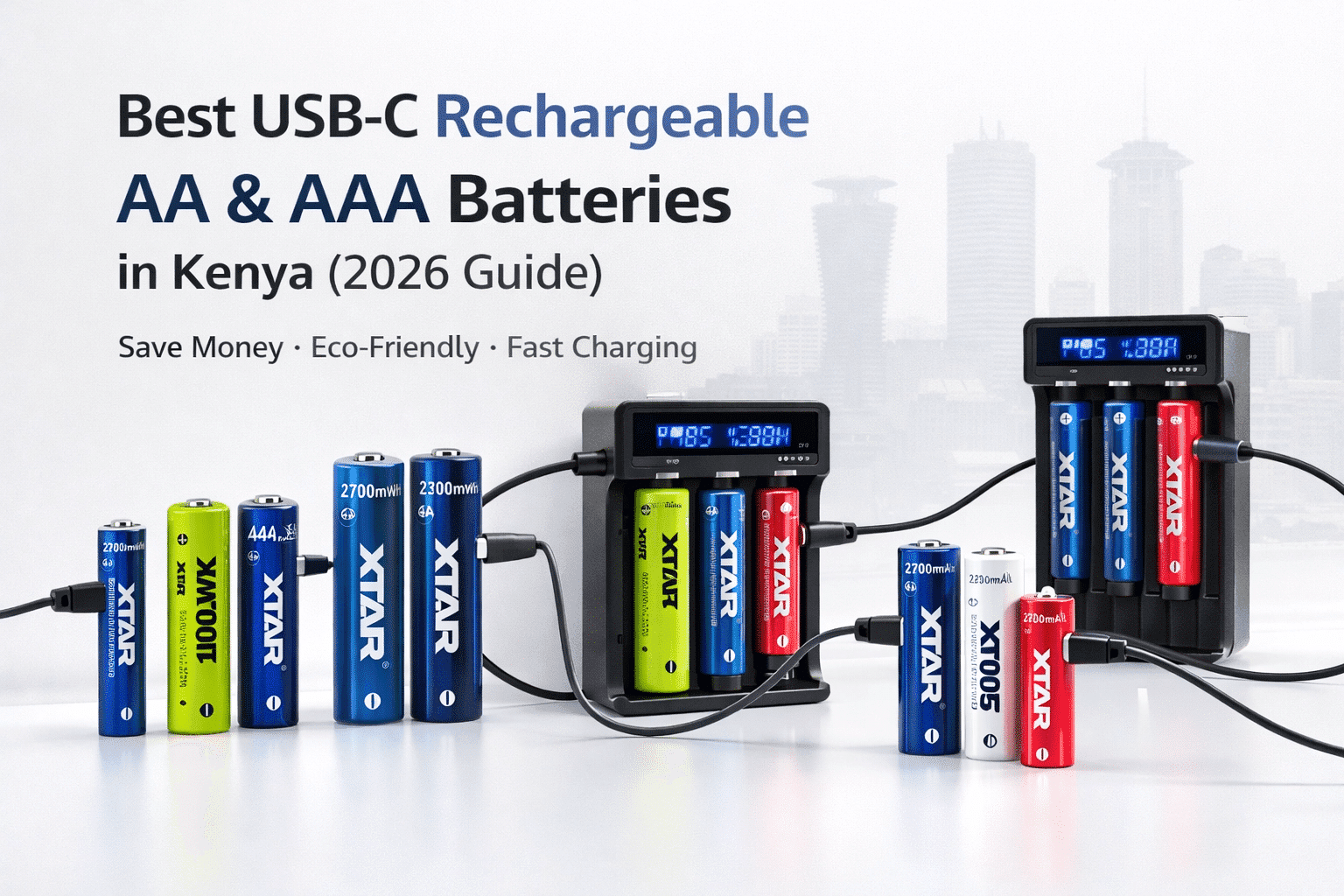
Best USB-C Rechargeable AA & AAA Batteries in Kenya (2026 Guide)
Direct USB-C Charging: No External Charger Needed
Stop buying disposable batteries. USB-C rechargeable lithium batteries let you charge AA and AAA cells directly with any USB-C cable phone charger, power bank, laptop, or solar power bank. Perfect for church wireless microphones, computer peripherals, toys, and emergency kits. Experience constant 1.5V output, 1200+ recharge cycles, and built-in LED battery indicators.
Why Lithium-Ion USB-C Batteries Beat Traditional Rechargeables
Not all rechargeable batteries are equal. Here’s why lithium-ion USB-C batteries outperform older NiMH (Nickel-Metal Hydride) technology:
| Feature | Lithium-Ion USB-C (XTAR) | Traditional NiMH |
|---|---|---|
| Voltage Output | Constant 1.5V until empty | Starts at 1.2V, drops during use |
| Charging Method | Direct USB-C cable (no charger) | Requires separate external charger |
| Charging Time | 2-3 hours full charge | 4-8 hours typical |
| Recharge Cycles | 1200+ cycles | 500-1000 cycles |
| Battery Indicator | Built-in LED shows charge level | None (guesswork required) |
| Energy Density | Higher (longer runtime per charge) | Lower (shorter runtime) |
| Self-Discharge | Very low (holds charge months) | Moderate (loses charge weekly) |
| Best For | High-drain devices: mics, cameras, toys | Low-drain: clocks, remotes |
Key Advantage for Kenya: USB-C charging means you can recharge anywhere using your phone charger, car USB port, power bank, or solar setup. No need to carry bulky external chargers to church, office, or field locations.
Top USB-C Rechargeable Batteries for Kenya
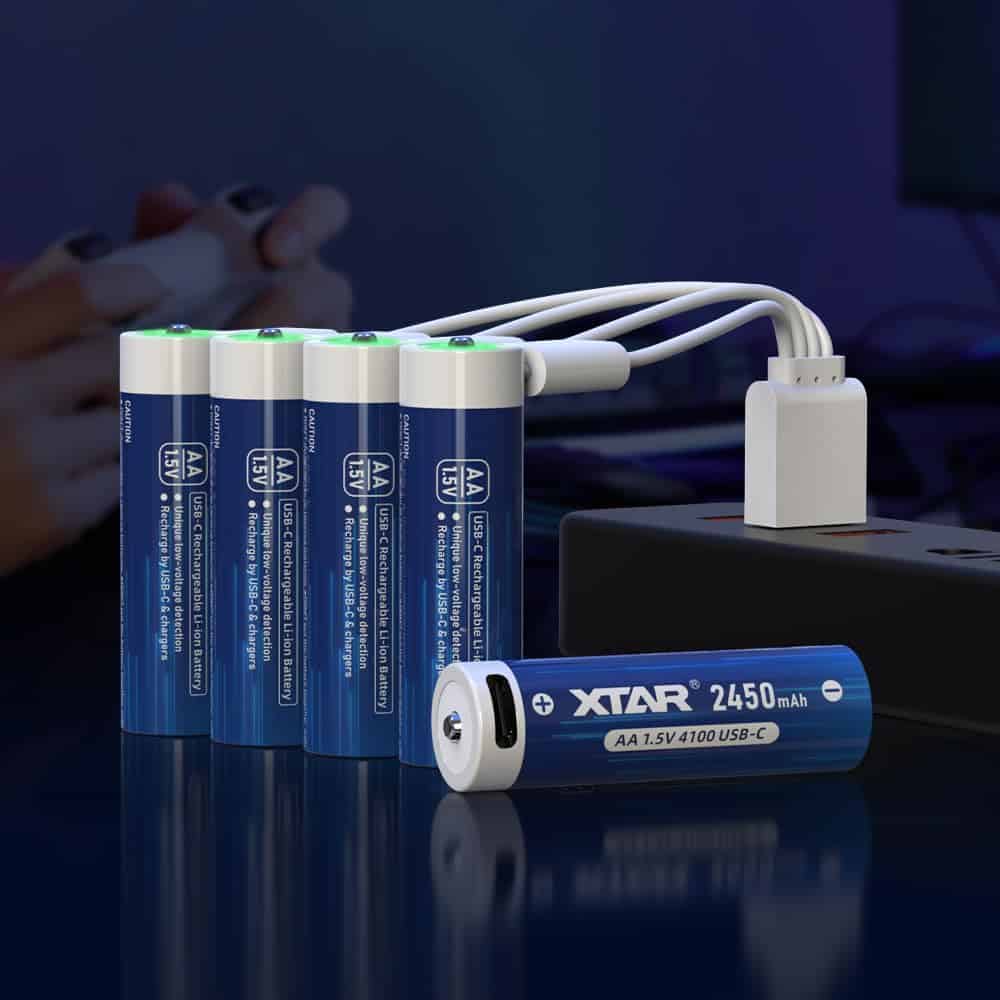
XTAR AA 2450mAh USB-C Battery (4-Pack)
- 4100mWh capacity (2450mAh)
- Constant 1.5V, 2A output
- Built-in USB-C charging port
- LED battery level indicator
- 1200+ recharge cycles
- Perfect for church wireless microphones
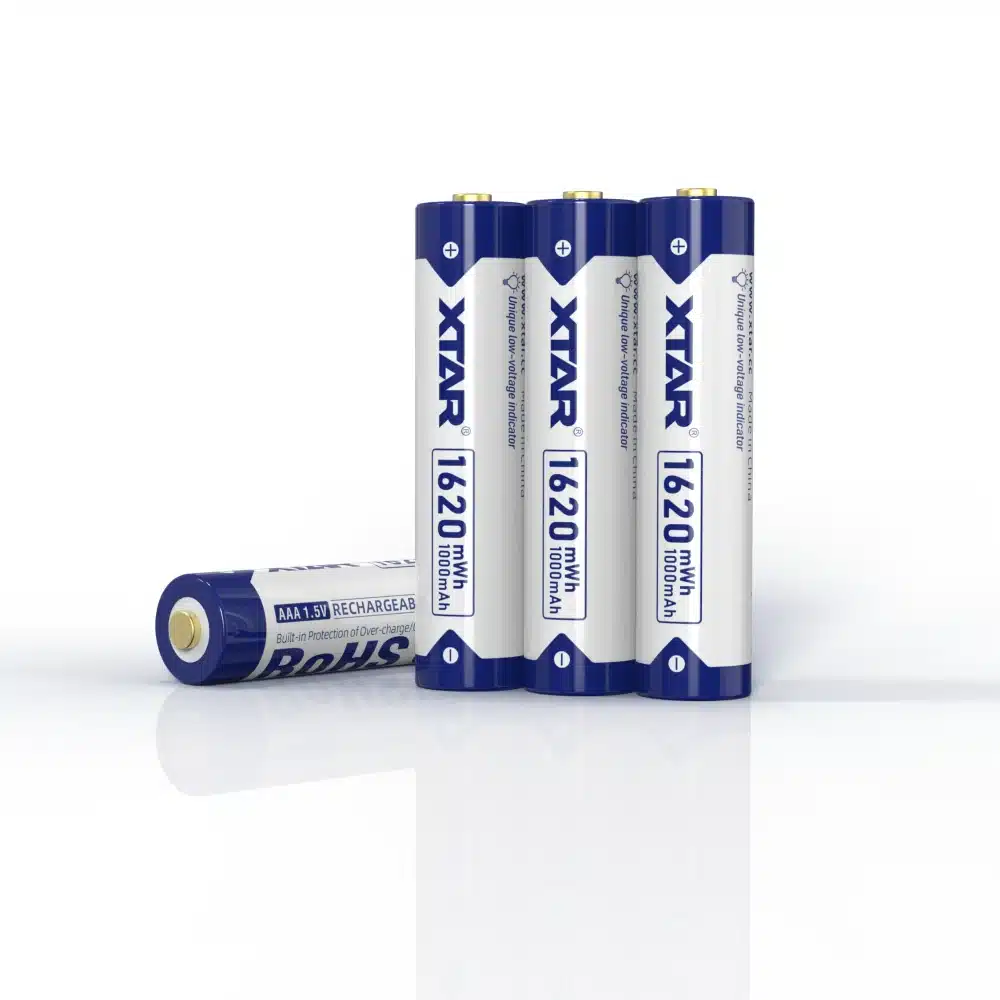
XTAR AAA 1000mAh USB-C Battery (4-Pack)
- 1620mWh capacity (1000mAh)
- Constant 1.5V output
- Built-in USB-C charging
- LED charge indicator
- 1200+ recharge cycles
- Ideal for wireless mice & keyboards
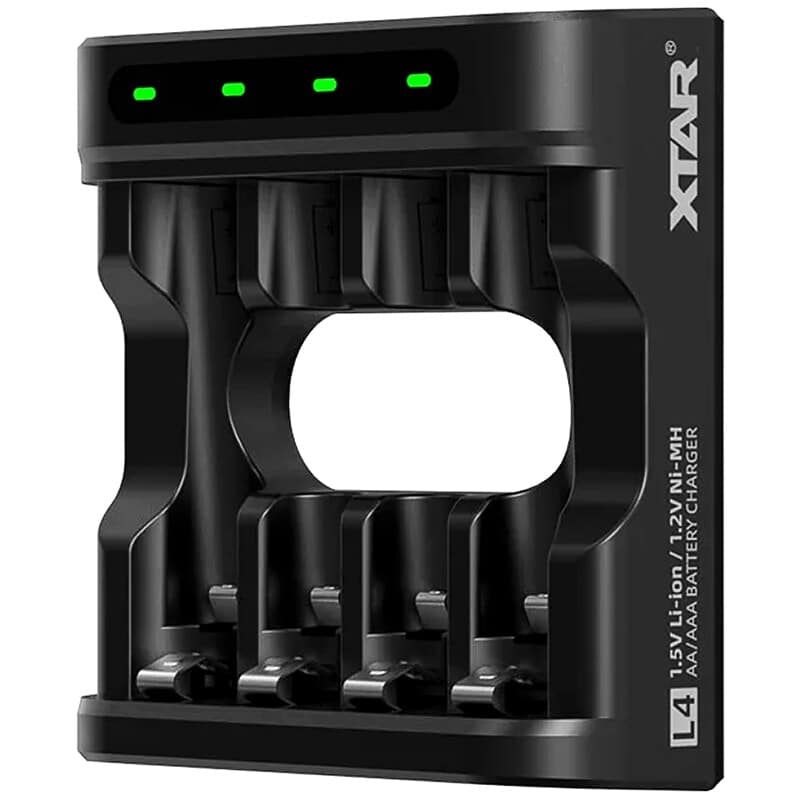
XTAR LC4 4-Slot USB-C Charger (AA/AAA)
- Charges 4 batteries simultaneously
- USB-C input (5V 2A)
- Individual LED indicators
- Fast charging: 1.5-1.7 hours
- Compatible with XTAR USB-C batteries
- Hollow-out heat dissipation
Perfect Applications for USB-C Rechargeable Batteries in Kenya
Church & Event Microphones
Wireless microphone systems for churches, conferences, and events demand reliable, consistent power. USB-C rechargeable AA batteries deliver constant 1.5V output, preventing audio dropouts during services. The LED indicator helps technicians know when to swap batteries before critical moments.
- Church wireless mics: Shure, Sennheiser, Audio-Technica systems
- Event PA systems: Portable speakers, handheld mics
- Conference equipment: Presentation remotes, lapel mics
Computer Peripherals & Office Equipment
Wireless mice, keyboards, presentation clickers, and webcams benefit from constant voltage. Unlike NiMH batteries that cause “low battery” warnings mid-presentation, lithium USB-C batteries maintain full performance until nearly empty.
- Wireless mice & keyboards: Logitech, Microsoft, Dell peripherals
- Presentation remotes: Logitech Spotlight, Kensington clickers
- Webcams & headsets: Logitech C920, Jabra headsets
Children’s Toys & Educational Devices
Battery-powered toys, learning tablets, and electronic games run at full speed with constant 1.5V output. Parents appreciate the LED indicator that shows when toys need recharging no more sudden shutdowns during playtime.
- Electronic toys: Remote control cars, interactive dolls
- Learning tablets: Kids’ educational devices, e-readers
- Handheld games: Portable gaming devices, electronic puzzles
Flashlights & Emergency Preparedness
Emergency flashlights, headlamps, and portable lights need reliable power during blackouts. USB-C rechargeable batteries ensure your emergency gear is always ready charge via power bank or solar panel when grid power fails.
- Emergency flashlights: Home, car, office emergency kits
- Headlamps: Security patrols, night repairs, camping
- Portable lanterns: Power outage lighting, outdoor events
Explore More Rechargeable Power Solutions
Looking for other battery types or chargers? We’ve got you covered: