

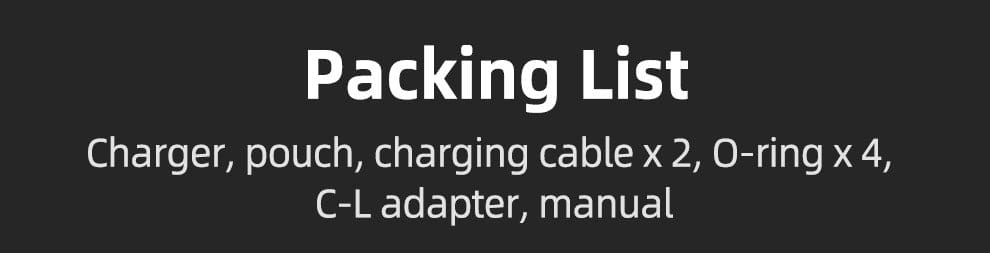
If you rely on rechargeable flashlights, headlamps, or other battery-powered gear on camping trips, you already know the frustration of dead batteries in the middle of nowhere. The Klarus K2A Intelligent Dual Battery Charger is built to solve exactly that problem — and it does it faster, smarter, and more safely than most chargers on the market.
In this review, we’ll break down everything you need to know about the Klarus K2A: what it charges, how fast it charges, whether it fits protected batteries (spoiler: yes), and why it belongs in every serious camper’s kit.
⚡ Quick Verdict
A compact, fast, and genuinely intelligent dual-slot charger that works with virtually every 18650, 20700, and 21700 battery — protected or not. At this price point, it’s one of the best value chargers available for outdoor enthusiasts.
Who Is the Klarus K2A For?
The K2A is designed with active, gear-dependent people in mind. If any of these sound like you, this charger is worth your attention:
- You carry a high-powered flashlight or headlamp on hikes, camping trips, or night hunts
- You use 18650 or 21700 rechargeable batteries in your everyday carry (EDC) gear
- You want a charger that doubles as a USB power bank in emergencies
- You’re tired of carrying multiple chargers for different battery sizes
- You want something small enough to fit in a pack but powerful enough to charge two cells fast
Design & Build Quality
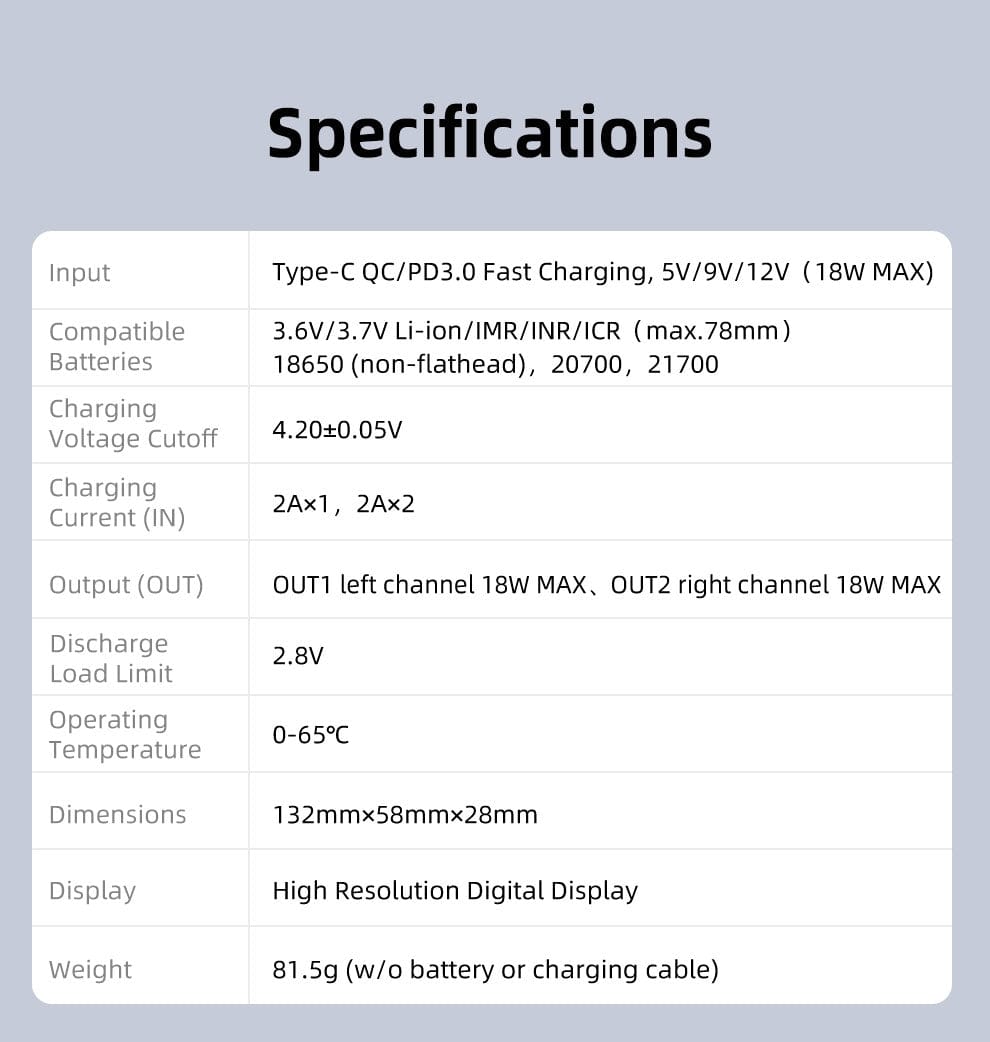
The K2A is impressively small for what it does. At just 5.2 × 2.28 × 1.1 inches and a featherlight 40 grams (without batteries or cable), it takes up almost no space in a daypack or gear bag. The matte black housing feels solid without being heavy, and the spring-loaded battery contacts give a satisfying, secure click when a cell is seated.
The input is USB-C, which means you can power it from a laptop, a car charger, a solar panel, or a power bank — an important flexibility when you’re off-grid. The output side has both a USB-A and USB-C port, so you can use it as a rudimentary power bank to top up a phone or GPS unit from a charged battery in the slot.
“At 40g, the K2A weighs less than a protein bar. There’s genuinely no excuse not to have a spare battery topped off when you’re heading into the backcountry.”
Charging Performance: How Fast Is It Really?
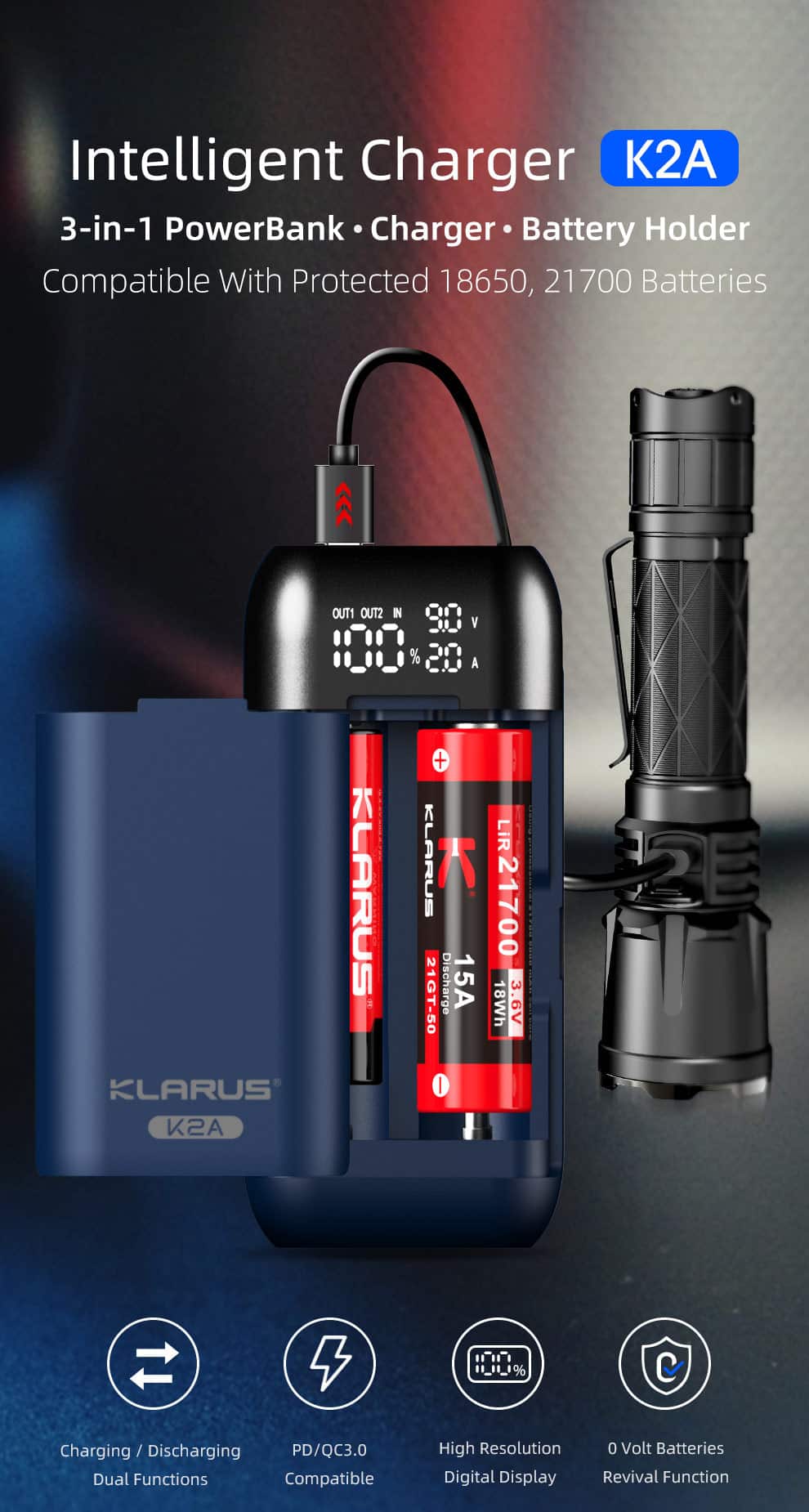
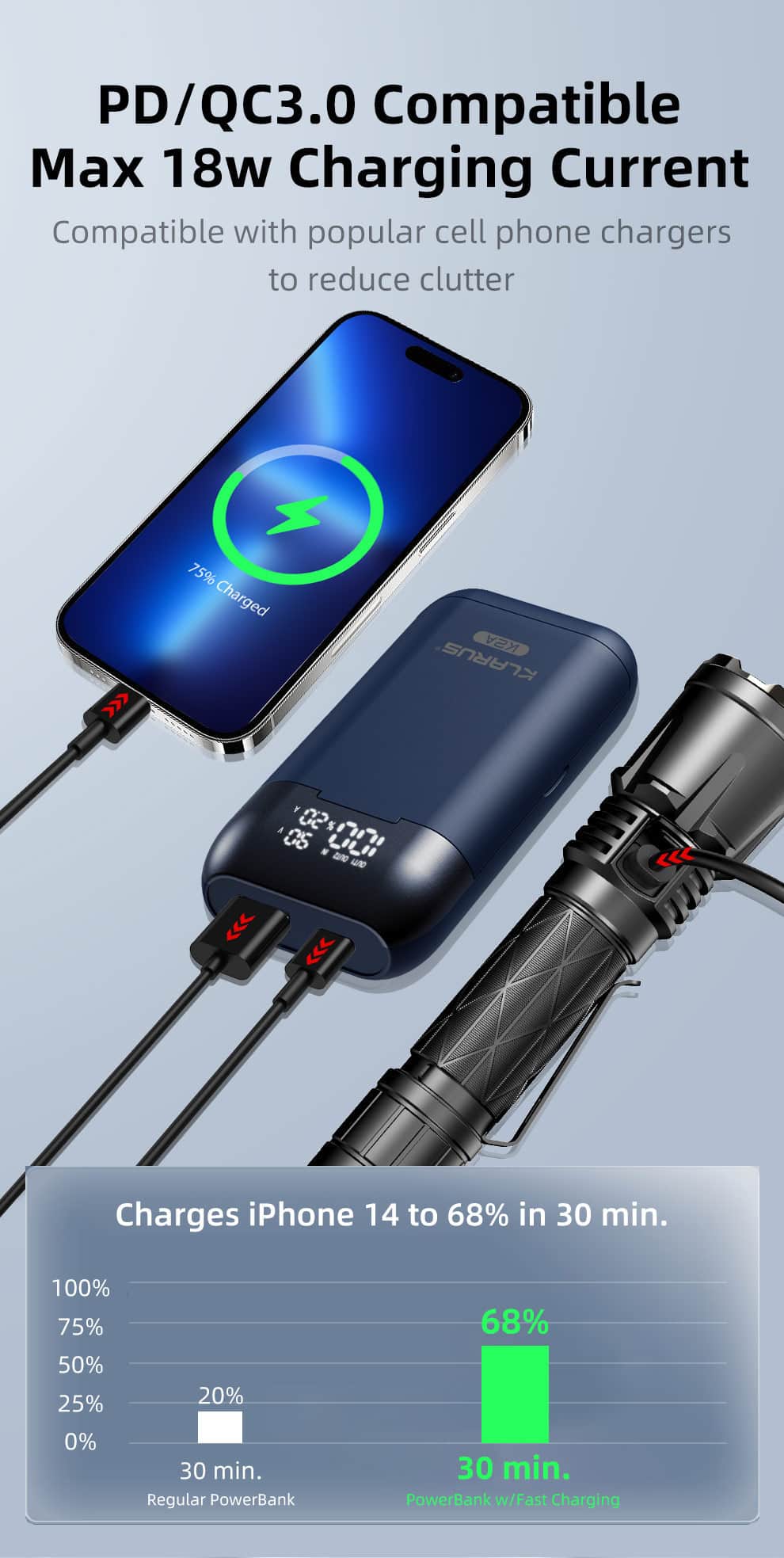
This is where the K2A separates itself from budget chargers. With QC 3.0 and PD 3.0 support on both input and output, it can pull serious power from a compatible adapter and distribute it efficiently to your batteries.
Here’s how the charging current breaks down:
- 2A × 2 — Both slots charging simultaneously at full 2A each
- 2A × 1 — Single battery mode, full current to one slot
- 1A × 2 — Balanced mode for slower, gentler charging
In practice, a standard 18650 with a 3000mAh capacity charges from flat to full in roughly 90–120 minutes at 2A — which is genuinely fast for a charger this size. The intelligent system also monitors each slot independently, so a smaller 18650 in one slot and a larger 21700 in the other will each get exactly what they need.
Protected vs. Unprotected Batteries: Does the K2A Fit Both?
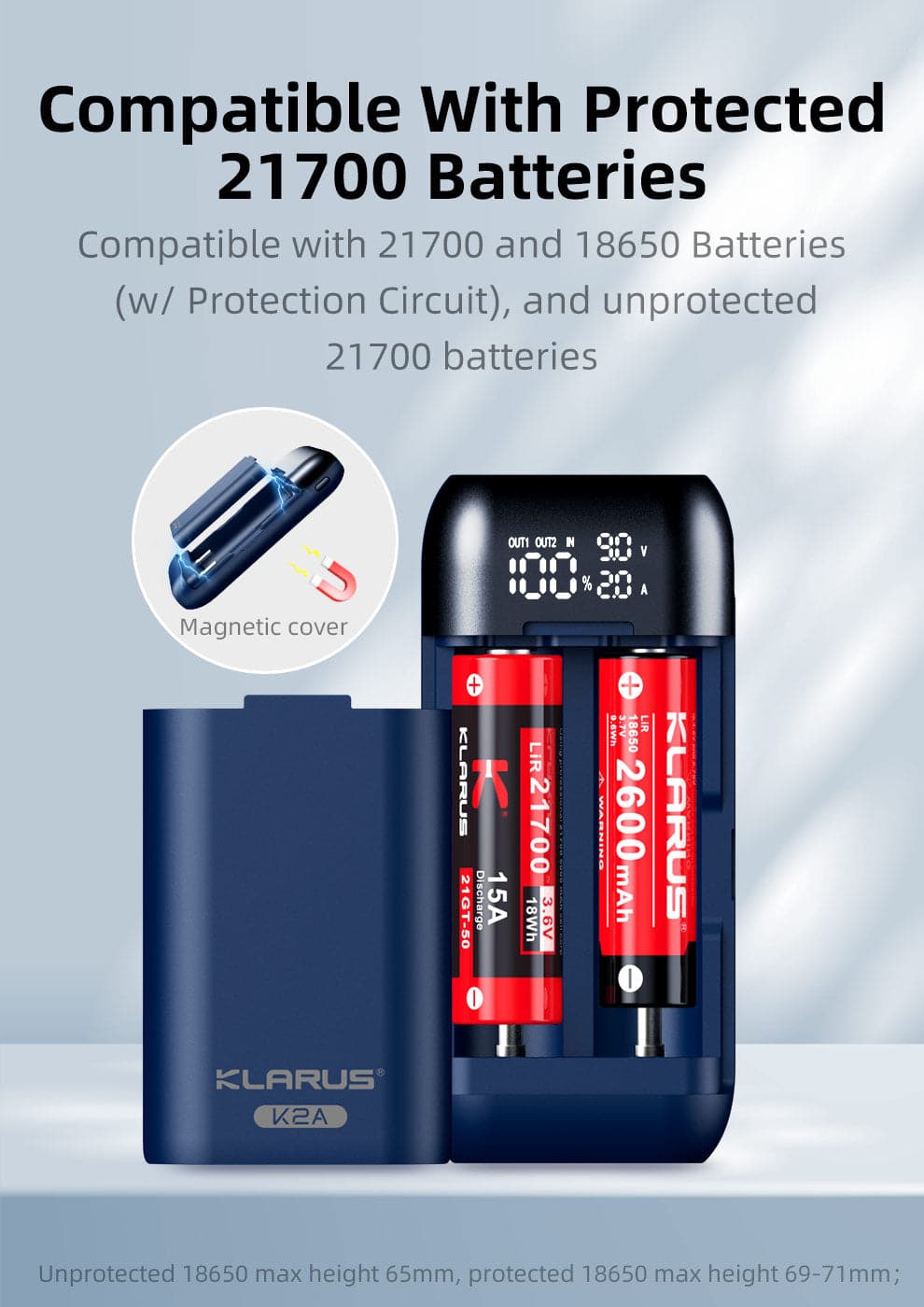
This is one of the most common questions about any cylindrical Li-ion charger, and the answer with the K2A is a clear yes — it supports both.
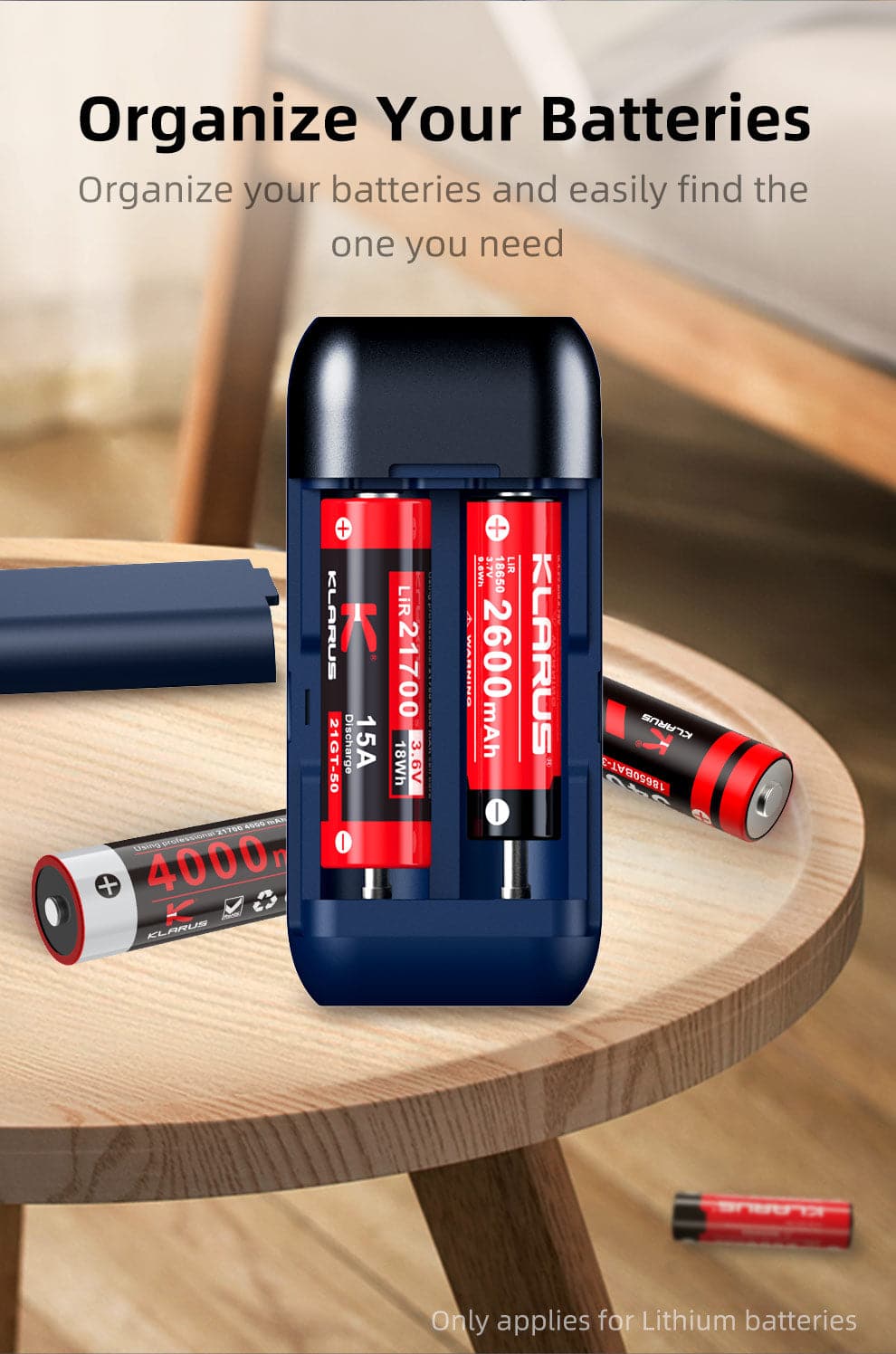
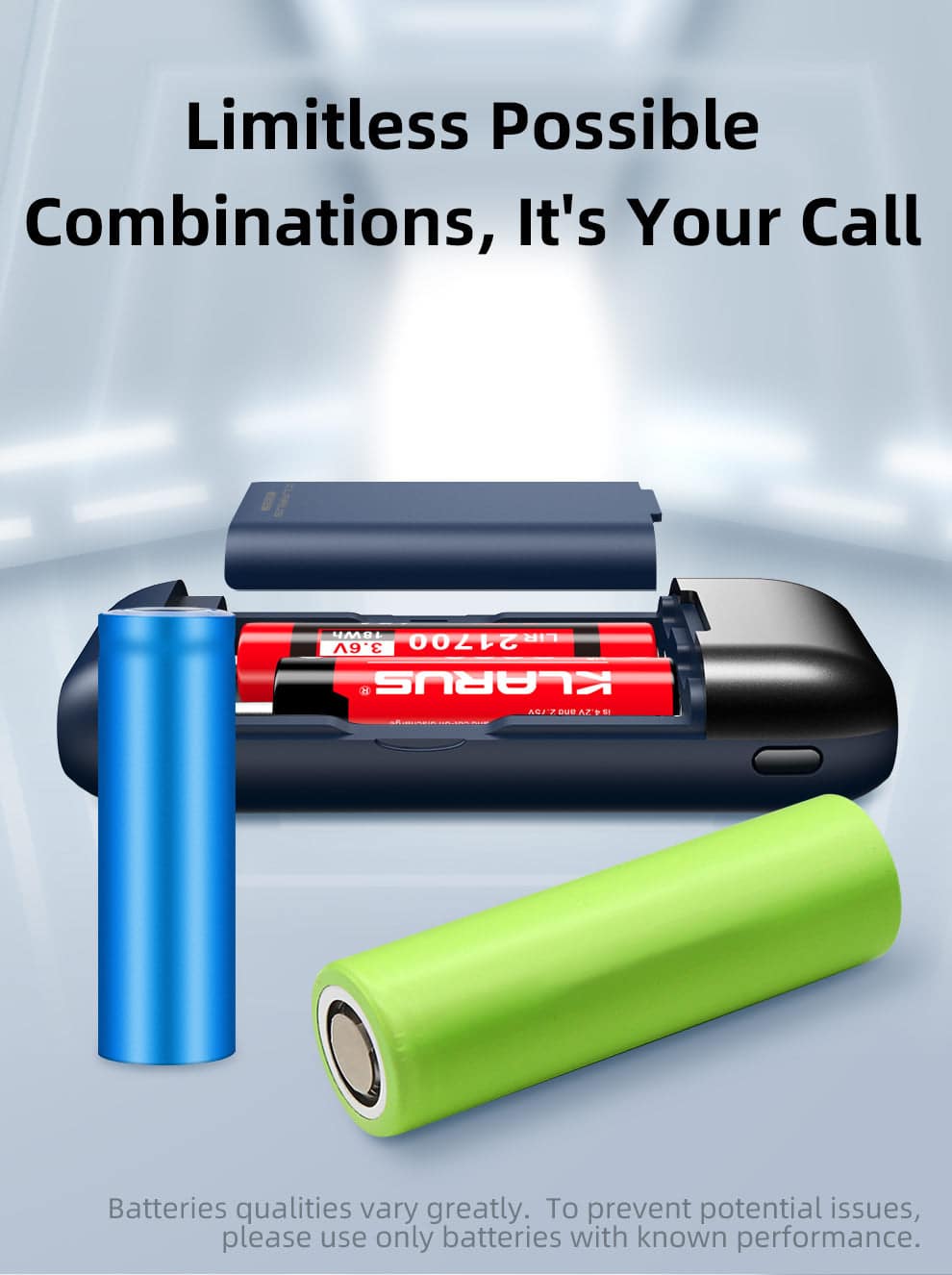
Protected batteries have a small PCB safety circuit attached to one end of the cell. This circuit prevents the battery from being overcharged, over-discharged, or short-circuited — making them the safer choice for flashlights and outdoor gear. The trade-off is that they’re slightly longer: typically 68–71mm for 18650 cells and up to 78mm for 21700 cells.
Many cheaper chargers max out at 65–67mm — meaning protected cells simply won’t fit. The K2A’s extended slot length of up to 78mm means you can drop in your protected batteries without force, adapters, or anxiety. Unprotected batteries are also fully supported; the K2A’s own internal protection circuits take over safety monitoring regardless of what you insert.
Battery Compatibility
| Battery Size | Protected | Unprotected | Max Length Supported |
|---|---|---|---|
| 18650 | ✅ Yes | ✅ Yes | ~71mm |
| 20700 | ✅ Yes | ✅ Yes | ~75mm |
| 21700 | ✅ Yes | ✅ Yes | 78mm |
Note: The K2A does not charge AA, AAA, NiMH, or alkaline batteries. It is strictly for 3.6V/3.7V lithium-ion cylindrical cells.
Safety Features: Can You Trust It with Your Batteries?
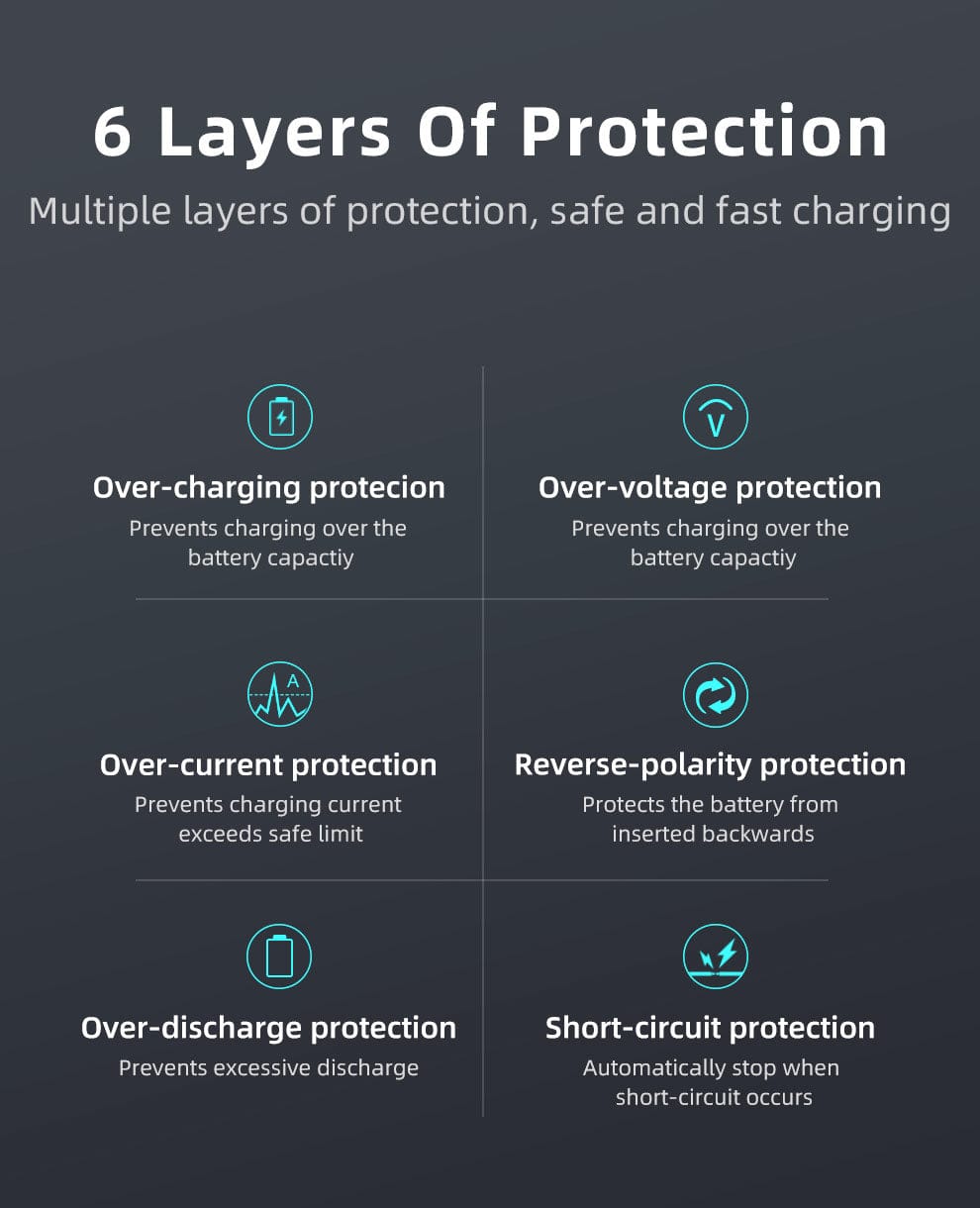
Outdoor gear lives in tough conditions — heat, dust, humidity, vibration. The K2A’s multi-layer protection system is designed with exactly this in mind:
- Overcharge protection — automatically cuts power when a battery reaches full capacity
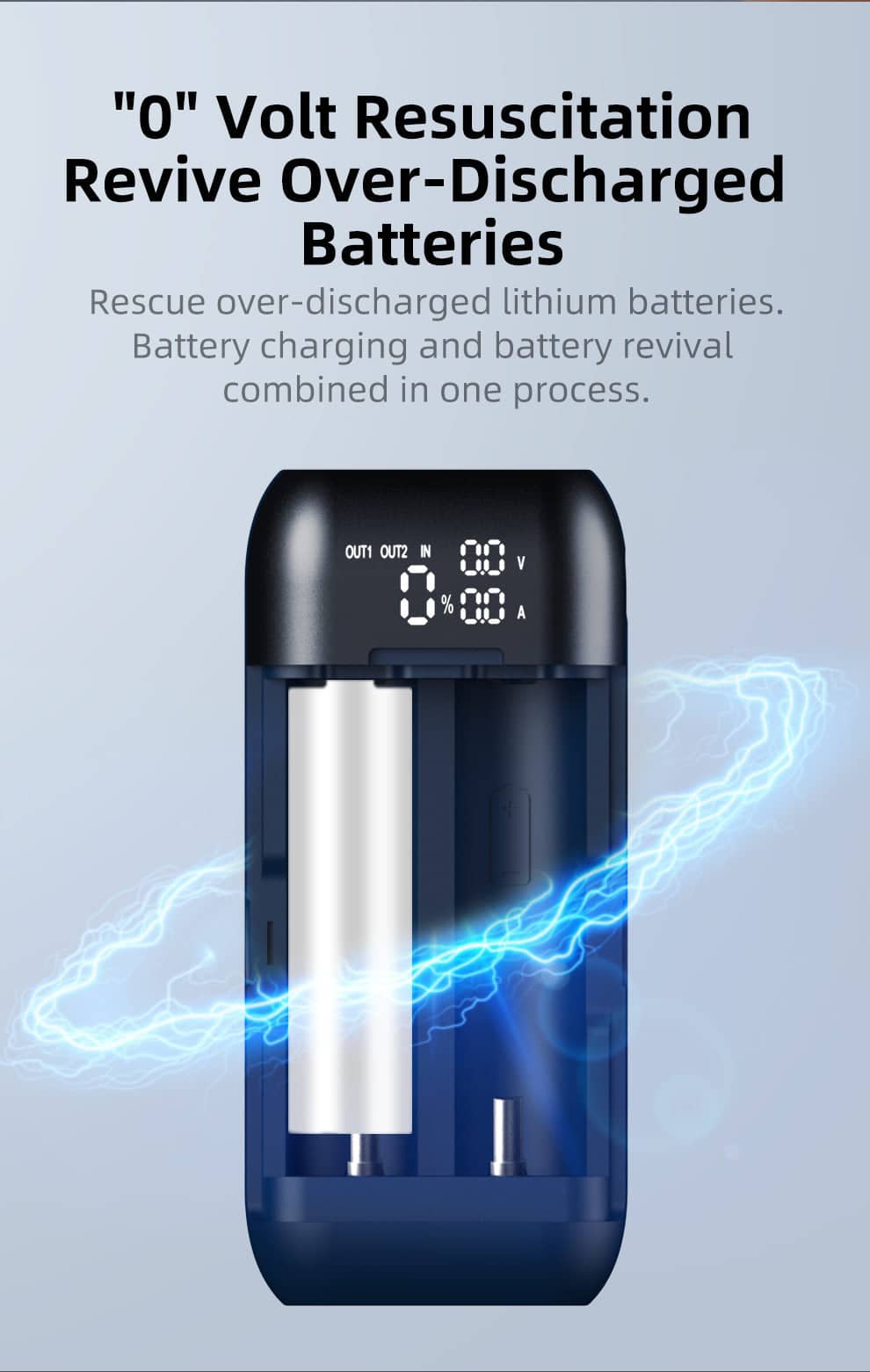
- Over-discharge protection — won’t damage deeply discharged cells
- Over-temperature protection — shuts down if the unit or battery runs too hot
- Short-circuit protection — guards against accidental shorts
- Reverse polarity protection — saves your batteries if inserted the wrong way
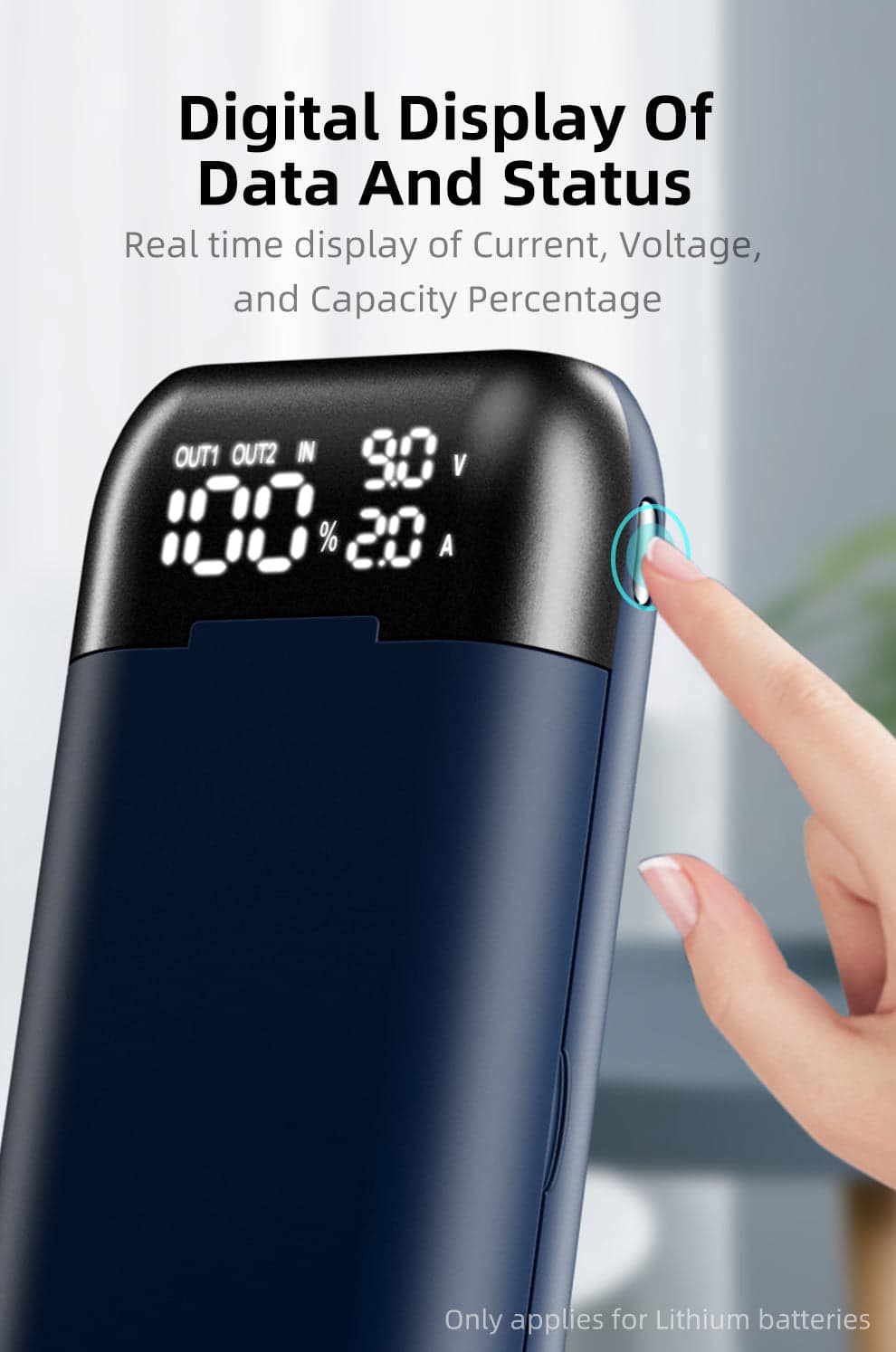
The operating temperature range of 0°C to 65°C covers everything from cold desert nights to hot summer car interiors. LED indicators on each slot give you real-time charge status, changing to a steady green when your cell is full.
Bonus Feature: Emergency Power Bank Mode
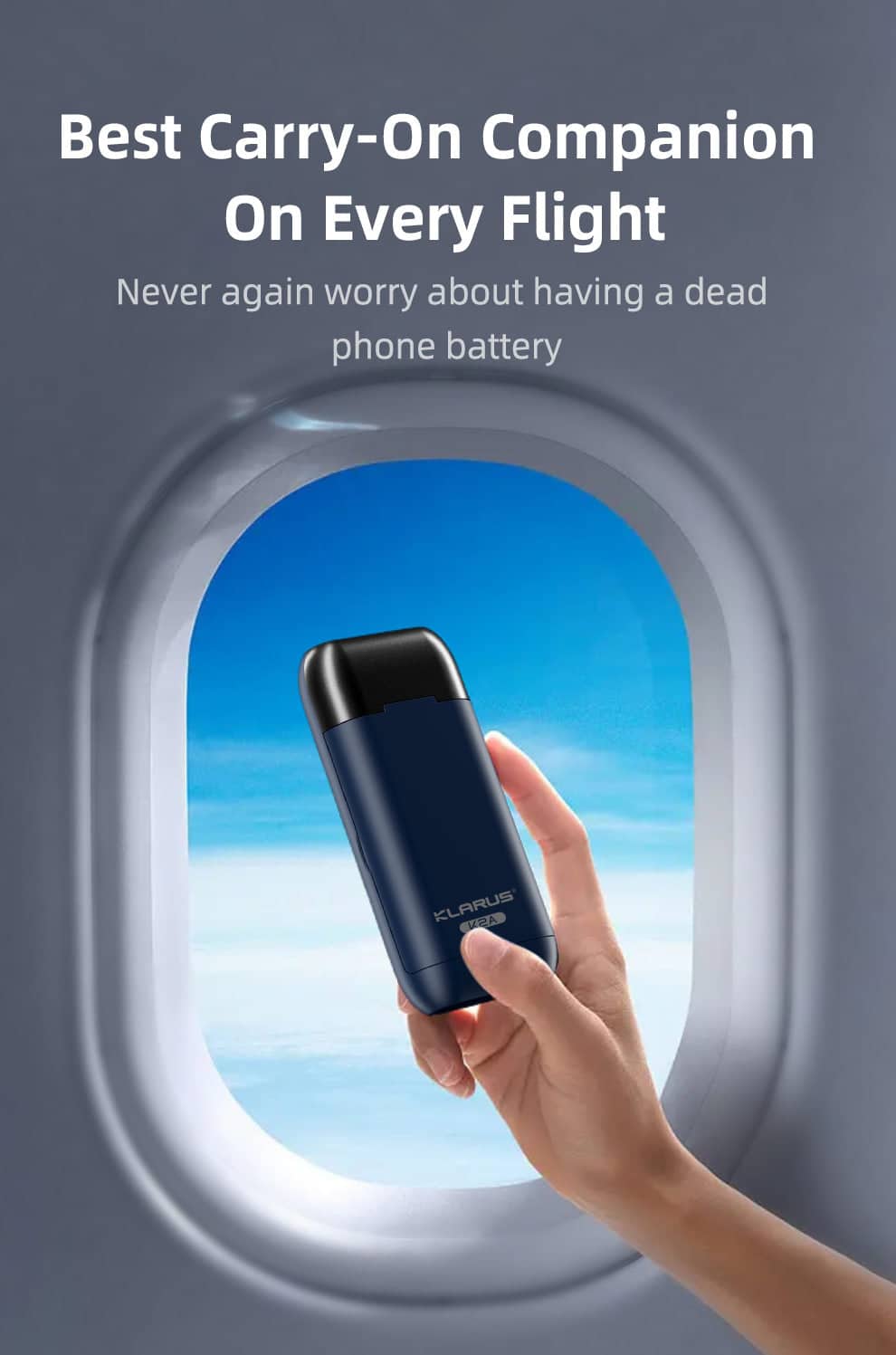
Here’s a feature that campers genuinely love: insert a charged battery into one of the slots, and the K2A’s USB-A or USB-C output ports become a makeshift power bank — delivering QC 3.0 / PD 3.0 speeds to your phone, GPS, headlamp, or any other USB device.
It won’t replace a dedicated power bank for multi-day trips, but as an emergency top-up when your phone is dying and camp is still two hours away, it’s an invaluable backup. One fully charged 18650 (3000–3500mAh) can get a modern smartphone from 0 to roughly 60–70% charge.
Full Technical Specifications
| Spec | Detail |
|---|---|
| Input | 5V/2A, 9V/2A, 12V/1.5A (QC 3.0 / PD 3.0) |
| Output (USB ports) | USB-C & USB-A: 5V/2A, 9V/2A, 12V/1.5A (QC 3.0 / PD 3.0) |
| Charging Current | 2A×2 / 2A×1 / 1A×2 |
| Compatible Batteries | 3.6V/3.7V Li-ion: 18650 (protected & unprotected), 20700, 21700 |
| Max Battery Length | 70–78mm |
| Operating Temperature | 0°C – 65°C |
| Weight | 40g (without battery & cable) |
| Dimensions | 5.2 × 2.28 × 1.1 in (132 × 58 × 28 mm) |
Pros & Cons
✅ Pros
- Supports protected batteries up to 78mm
- QC 3.0 / PD 3.0 — genuinely fast charging
- Dual independent slots — mix battery sizes
- Emergency USB power bank output
- Ultra-compact and lightweight (40g)
- USB-C input — one cable for everything
- Comprehensive safety protections
- Affordable price point
❌ Cons
- Only 2 slots (not ideal for high-volume users)
- No LCD screen — LED indicators only
- No NiMH / AA / AAA support
- Cable not included with all bundles
See It in Action
Frequently Asked Questions
Final Verdict: Should Outdoor Enthusiasts Buy the Klarus K2A?
In a word — yes. The Klarus K2A hits a sweet spot that’s genuinely hard to find at its price: it’s small enough to carry everywhere, fast enough to matter, smart enough to handle protected batteries without a second thought, and versatile enough to double as an emergency power source.
For anyone who carries a high-performance flashlight, headlamp, or any 18650/21700-powered device into the outdoors, the K2A is a no-brainer upgrade over basic single-slot chargers. The support for protected cells alone makes it worth it — you shouldn’t have to choose between safety features on your battery and whether it physically fits your charger.
If you’re building out your camping or EDC kit and need a reliable, compact battery charger, the Klarus K2A belongs on your shortlist.
Get the Klarus K2A
In stock now — KSh 3,218.73. Free yourself from dead batteries on your next adventure.
Shop the Klarus K2A →